

Personalized homes create deeper satisfaction and comfort than generic spaces. Research shows that tailored living environments boost satisfaction by 30%, making personalization a powerful tool for enhancing daily life. This guide explores how modern furniture and thoughtful decor transform houses into havens that reflect your personality while maximizing function and style.
Table of Contents
- Introduction To Home Personalization
- Emotional And Psychological Benefits Of Home Personalization
- Functional Benefits Of Personalizing Your Home
- Stylistic Advantages Of Using Modern Furniture And Decor
- Common Misconceptions And Pitfalls
- Developing A Home Personalization Framework
- Practical Steps To Personalize Your Home
- Explore Stylish Home Decor And Lighting Solutions
- FAQ
Key takeaways
| Point | Details |
|---|---|
| Emotional well-being | Personalized spaces reduce stress and increase satisfaction by creating stronger emotional connections to your home. |
| Functional gains | Optimized layouts and furniture arrangements boost usable space by up to 25%, improving comfort and productivity. |
| Modern versatility | Contemporary modular furniture offers adaptable style options that grow with your changing needs and preferences. |
| Avoid clutter risks | Over-personalization can increase stress by 15%, so balance personal touches with functional simplicity. |
Introduction to home personalization
Home personalization means shaping your living space to reflect your unique preferences, lifestyle, and needs through intentional furniture choices, decor selections, and spatial arrangements. This trend has surged among homeowners and young professionals seeking environments that feel authentically theirs rather than showroom replicas.
Personalization goes far beyond aesthetics. It encompasses comfort optimization, functional improvements, and emotional expression. When you select furniture that fits your daily routines and display items with personal meaning, you create a space that supports both practical needs and psychological well-being.
The benefits span multiple dimensions:
- Enhanced emotional connection to your living environment
- Improved daily functionality through optimized layouts
- Greater satisfaction from spaces that reflect your identity
- Increased comfort from furniture and arrangements tailored to your habits
Young professionals especially value this customization capability. They want homes that adapt to remote work needs, social gatherings, and personal relaxation without compromising style. For comprehensive guidance on modern approaches, explore this home decor guide 2026 resource.
Personalization transforms houses into homes by aligning physical spaces with the people inhabiting them. This alignment creates environments where you naturally feel more comfortable, productive, and content.
Emotional and psychological benefits of home personalization
Your living environment directly impacts mental health and emotional stability. Spaces reflecting your personality foster stronger psychological connections that reduce stress and boost overall life satisfaction. Research confirms that people with personalized living spaces report 30% higher satisfaction compared to those in generic environments.
Personal items create powerful emotional anchors. Family photos, meaningful artwork, and collected memorabilia transform neutral spaces into repositories of positive memories. These visual reminders strengthen your sense of belonging and identity within your home.
The psychological benefits manifest in several ways:
- Reduced anxiety through familiar, comforting surroundings
- Enhanced mood from spaces reflecting personal taste
- Stronger sense of control over your environment
- Increased motivation to maintain and enjoy your home
“A home that reflects who you are becomes a sanctuary where you can truly relax and recharge from daily demands.”
Customization also supports mental health by creating environments aligned with your needs. If you thrive in organized spaces, personalized storage solutions reduce cognitive load. If creativity matters, dedicated inspiration areas boost your expressive output.
These emotional connections explain why personalization feels so rewarding. Your home becomes more than shelter. It becomes an extension of yourself, supporting your well-being through thoughtful design choices. Learn more about these connections through insights on emotional benefits of home decor.
Functional benefits of personalizing your home
Beyond emotional advantages, personalization delivers measurable functional improvements. Strategic furniture placement and layout optimization directly impact how efficiently you use your space. Studies show that optimized furniture placement increases usable living space by 25%, dramatically enhancing comfort and utility.
Tailored layouts accommodate your specific activities and movement patterns. If you frequently entertain, arranging seating to facilitate conversation makes gatherings more enjoyable. For remote workers, positioning desks near natural light improves focus and reduces eye strain.
Functional personalization manifests through several key improvements:
| Improvement Area | Functional Benefit | Impact |
|---|---|---|
| Traffic flow | Reduced congestion in high-use areas | Smoother daily routines |
| Storage access | Items placed based on frequency of use | Less time searching |
| Multi-use zones | Flexible spaces serving multiple purposes | Maximized square footage value |
| Ergonomic positioning | Furniture height and distance optimized | Reduced physical strain |
Comfort increases when furniture dimensions match your body and habits. A sofa at the right height for your legs, a coffee table at optimal reach distance, and shelving positioned for easy access all reduce physical effort throughout your day.

Pro Tip: Measure your most-used furniture paths and ensure at least 36 inches of clearance for comfortable movement, especially in kitchens and living rooms where you spend significant time.
Productivity gains emerge from personalized work and hobby areas. When everything has an intentional place supporting your workflows, you waste less time on setup and cleanup. This efficiency compounds daily, creating substantial time savings over months.
For detailed strategies on spatial optimization, review guidance on how to optimize living room layout for maximum functionality.
Stylistic advantages of using modern furniture and decor
Modern furniture designs offer exceptional personalization potential through clean lines, modular configurations, and versatile aesthetics. Contemporary pieces blend form and function, allowing you to express style without sacrificing practicality. Modern modular furniture appeals to young professionals seeking versatile living spaces that adapt to evolving needs.
Modular systems exemplify this adaptability. Sectional sofas reconfigure for different room layouts or guest numbers. Stackable storage units expand vertically or horizontally as collections grow. These flexible designs prevent furniture from becoming obsolete when circumstances change.
Key stylistic benefits include:
- Timeless aesthetics that remain relevant across trends
- Neutral foundations that accommodate accent piece changes
- Mix-and-match capabilities across manufacturers
- Space-efficient profiles ideal for urban living
Lighting plays a crucial role in stylistic personalization. Modern fixtures offer adjustable brightness and color temperature, letting you shift ambiance from energizing morning light to relaxing evening warmth. This control directly influences mood and spatial perception.
Pro Tip: Layer three lighting types in each room: ambient (overall illumination), task (focused work light), and accent (highlighting decor). This creates visual depth and functional flexibility.
Color psychology influences how spaces feel. Cool tones promote calm and focus, making them ideal for bedrooms and offices. Warm tones encourage energy and social interaction, perfect for living and dining areas. Modern furniture often uses neutral bases, letting you introduce personality through easily changed accessories like pillows, throws, and artwork.
Texture combinations add visual interest without clutter. Pairing smooth surfaces with natural wood, soft textiles with metal accents, or matte finishes with glossy elements creates dynamic compositions that feel curated rather than chaotic.
For deeper exploration of contemporary approaches, read about modern home decor explained and discover the role of lighting in decor.
Common misconceptions and pitfalls
Several myths about home personalization create unnecessary barriers or lead to unsatisfying results. Understanding these misconceptions helps you personalize effectively without common mistakes.
Myth one claims personalization requires substantial budgets. Reality shows strategic shopping yields impressive results affordably. Focus on statement pieces rather than wholesale replacement. One quality sofa transforms a room more than five mediocre accessories.
Myth two suggests personalization concerns only aesthetics. Function matters equally. Beautiful furniture that doesn’t fit your lifestyle creates frustration rather than satisfaction. A stunning dining table too small for family dinners becomes a source of regret.
Key misconceptions to avoid:
- Believing you must personalize everything simultaneously
- Assuming trends should override personal preferences
- Thinking more decor always improves spaces
- Neglecting future flexibility in design choices
Over-personalization represents a significant risk. Research indicates excessive decor increases stress and reduces comfort by 15%. Too many personal items create visual noise that overwhelms rather than welcomes.
This balance challenge appears in several scenarios:
| Situation | Under-Personalized | Over-Personalized | Balanced Approach |
|---|---|---|---|
| Wall decor | Empty, cold walls | Every surface covered | Focal point pieces with breathing room |
| Collections | Hidden away entirely | Displayed without curation | Rotating displays of favorites |
| Color schemes | All neutral, no personality | Competing bold patterns | Neutral base with intentional pops |
| Furniture density | Sparse, uncomfortable | Cramped, difficult navigation | Adequate seating with clear pathways |
Clutter from excessive personalization reduces functionality. When surfaces overflow with items, cleaning becomes difficult and spaces feel chaotic. This physical disorder often translates to mental clutter, counteracting personalization’s intended benefits.
Developing a home personalization framework
A structured approach prevents personalization from becoming overwhelming or producing inconsistent results. The three-pillar framework balances aesthetics, function, and emotional connection to create cohesive, satisfying spaces that serve you well long-term.
Aesthetics encompass visual harmony, style consistency, and design appeal. This pillar ensures your home looks intentional rather than random. It addresses color coordination, proportion balance, and overall visual flow between rooms.
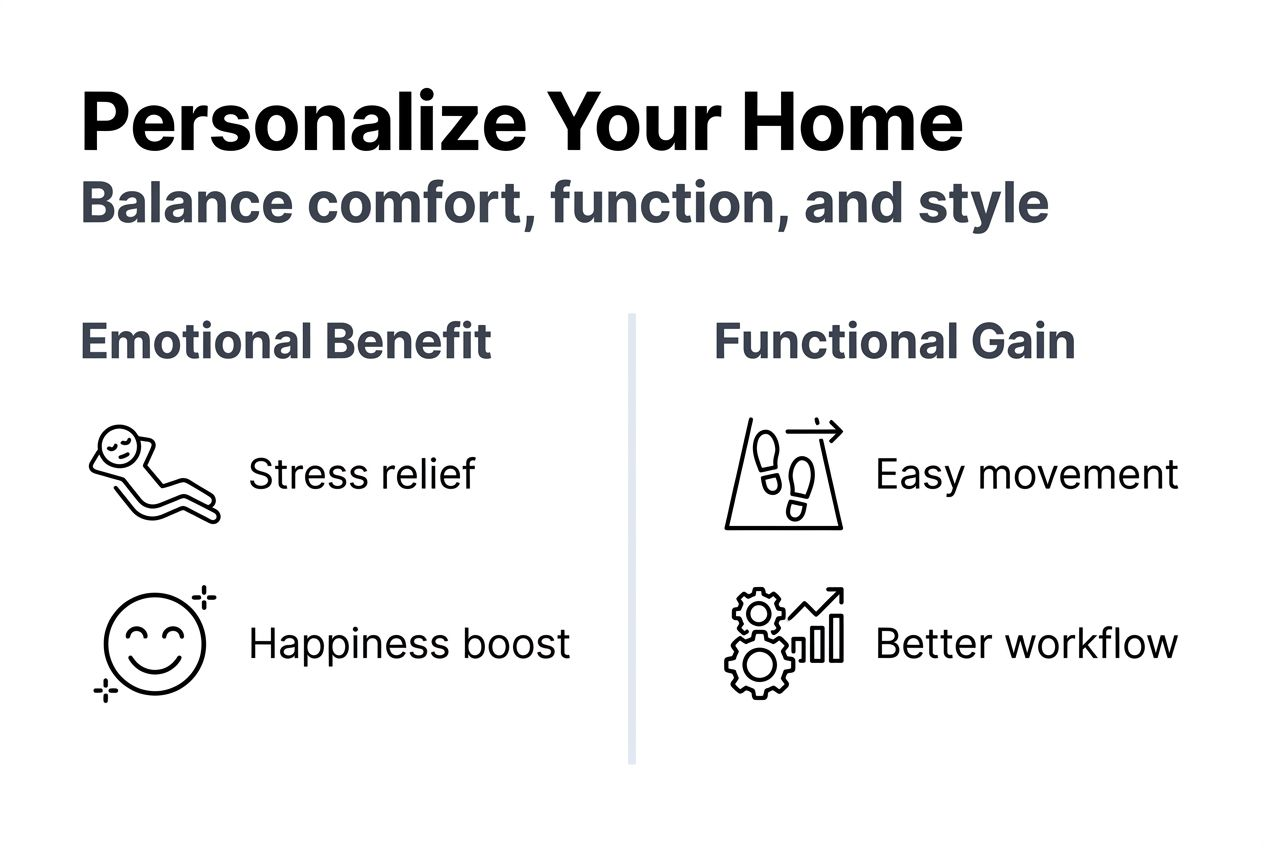
Function covers practical usability, comfort optimization, and spatial efficiency. This pillar ensures personalization improves rather than hinders daily life. It addresses furniture ergonomics, layout logic, and storage adequacy.
Emotional connection represents personal meaning, identity expression, and psychological comfort. This pillar ensures your home feels authentically yours. It addresses meaningful item display, memory incorporation, and value alignment.
Framework application follows these steps:
- Assess current state across all three pillars to identify gaps
- Prioritize improvements based on which pillar needs most attention
- Select changes supporting multiple pillars simultaneously when possible
- Implement gradually to evaluate each addition’s impact
- Adjust as lifestyle evolves and priorities shift
Balancing these pillars creates sustainable satisfaction. A beautiful but uncomfortable chair fails the function test. Highly practical but emotionally empty spaces miss connection opportunities. Meaningful but cluttered rooms sacrifice aesthetics.
| Decision Type | Aesthetic Priority | Function Priority | Emotional Priority | Balanced Solution |
|---|---|---|---|---|
| Artwork selection | Matches color scheme | Fits available wall space | Personally meaningful | Meaningful art in complementary colors appropriately sized |
| Sofa purchase | Trending style | Comfortable dimensions | Reminds you of cherished place | Classic design in comfortable size with travel-inspired fabric |
| Lighting choice | Statement fixture | Adequate illumination | Creates desired mood | Attractive fixture with adjustable brightness |
Pro Tip: Before major purchases, rate how well each option serves all three pillars on a 1 to 10 scale. Items scoring at least 7 in two pillars and 5 in the third typically deliver lasting satisfaction.
Real examples demonstrate framework effectiveness. A young professional chose a modular desk system (high function, medium aesthetics) and personalized it with family photos and travel souvenirs (high emotional connection). This combination created a workspace supporting productivity while feeling personally meaningful.
Explore how technology enhances this framework through smart home decor explained, showing how modern solutions can serve all three pillars simultaneously.
Practical steps to personalize your home
Implementing personalization successfully requires methodical planning and execution. These actionable steps help you avoid common pitfalls while creating spaces that truly serve your needs and preferences.
Before purchasing anything, thoroughly assess your lifestyle patterns and space requirements. Track how you actually use each room for a week. Note where you spend time, what activities occur where, and which areas feel uncomfortable or inefficient. This data reveals personalization priorities.
Furniture selection forms the foundation of effective personalization:
- Measure your space precisely, including doorways and ceiling height for delivery considerations
- Identify must-have features based on your tracked usage patterns
- Research pieces serving multiple purposes to maximize value and flexibility
- Prioritize quality for high-use items like sofas and beds where durability matters
- Choose styles you genuinely enjoy rather than chasing trends that may not resonate
Integrate personal items gradually rather than all at once. Start with one meaningful piece per room and observe how it affects the space. Add more only if the area still feels incomplete. This prevents overwhelming visual clutter while maintaining personal touches.
Pro Tip: Use the “one in, one out” rule for decor items. When adding something new, remove something existing. This prevents accumulation and forces intentional curation of what you display.
Balance competing priorities through these strategies:
- Allocate 60% of budget to functional furniture, 30% to aesthetic improvements, 10% to experimental pieces
- Choose neutral bases for expensive items, adding personality through affordable accessories
- Mix investment pieces with budget finds to stretch resources
- Shop sales cycles strategically for major purchases
Style evolution happens naturally over time. Build in flexibility by avoiding permanent modifications for temporary preferences. Removable wallpaper, freestanding furniture, and changeable lighting fixtures allow updates without costly renovations.
For comprehensive planning resources, review this home decor checklist with essential steps and learn how to style your living room for a modern look. Additionally, explore quality home decor fabric options for upholstery and accents.
Explore stylish home decor and lighting solutions
Transforming personalization insights into reality requires quality furniture and decor that balance style with function. Modern collections offer versatile pieces supporting the three-pillar framework while accommodating diverse tastes and spatial constraints.
Contemporary furniture lines emphasize adaptability through modular designs and neutral foundations. These pieces serve as canvases for personal expression through accessories and arrangement while maintaining cohesive aesthetics. Lighting selections range from ambient fixtures creating overall warmth to task lighting supporting specific activities to accent pieces highlighting architectural features or cherished decor.
Discover curated selections designed for modern personalization at the home decor collection, featuring furniture and accessories that blend contemporary style with practical comfort. Explore the lighting collection to find fixtures enhancing ambiance while serving functional needs. New Way Ref offers complete solutions for creating personalized spaces that evolve with your lifestyle.
FAQ
How much does it typically cost to personalize a home effectively?
Effective personalization often costs under $200 when approached strategically. Focus on one statement piece per room rather than wholesale changes. Shop sales for quality items and use affordable accessories to add personality without breaking budgets.
What are simple ways to avoid over-personalizing and cluttering my space?
Prioritize multifunctional furniture that serves practical needs while expressing style. Integrate personal items gradually, assessing each addition’s impact before adding more. Maintain visual breathing room by leaving some surfaces clear and rotating displayed collections seasonally.
Can personalized furniture layouts really improve my daily comfort?
Yes, optimized layouts can increase usable space up to 25%, significantly enhancing comfort and functionality. Proper furniture positioning improves traffic flow, reduces physical strain, and makes daily activities more efficient. Learn more about optimized living room layouts for practical implementation.
How does modern lighting contribute to home personalization?
Lighting influences mood and spatial perception, making it essential for personalizing ambiance beyond furniture choices. Modern fixtures offer adjustable brightness and color temperature, letting you shift atmospheres for different activities and times of day. Explore the role of lighting in decor for comprehensive guidance on using illumination strategically.
Recommended
- What are trending decor styles 2026: complete guide – New Way Ref
- Kitchen decor trends 2026: Warm style & smart design – New Way Ref
- Smart Home Decor: Blending Style With Technology – New Way Ref
- Home Decor Guide 2026: Transform Your Urban Space Easily – New Way Ref
- Why invest in electric awnings for Yorkshire homes in 2026