

Cramped city apartments make every inch of your living room count. Crowded layouts or misplaced furniture quickly turn what should be a relaxing space into a daily challenge. For young professionals juggling limited square footage and a love for modern style, mastering living room layout optimization is the key to blending function and looks. Discover practical strategies that transform compact city living into a comfortable, visually appealing retreat as you shop for the right furniture online.
Table of Contents
- Defining Living Room Layout Optimization
- Popular Layout Types And Their Uses
- How Arrangement Impacts Space And Flow
- Common Mistakes When Planning Furniture
- Benefits For Comfort, Style, And Flexibility
Key Takeaways
| Point | Details |
|---|---|
| Living Room Layout Optimization | Strategic furniture arrangement maximizes function and style in small urban spaces, making every inch count. |
| Traffic Flow is Crucial | Clear pathways for movement prevent frustration and create a more inviting environment. |
| Adapt to Your Needs | Choose layouts that fit your lifestyle, allowing for flexibility and comfort. |
| Common Mistakes to Avoid | Overcrowding, poor traffic flow, and ignoring room function are frequent errors that can negatively impact your space. |
Defining Living Room Layout Optimization
Living room layout optimization means strategically arranging your furniture and decor to maximize both function and style in a limited urban space. It’s about making intentional choices about where each piece goes—not random placement.
In city living, you’re likely working with smaller square footage than suburban homes. Every inch counts, and poor layout choices waste valuable space while creating an uncomfortable environment.
What Layout Optimization Actually Involves:
Furniture layout optimization balances interior design guidelines with practical living needs. This means considering how people move through the room, where conversation naturally happens, and how pieces visually relate to each other.
The key is combining three elements:
- Functional accessibility: Ensure clear pathways and easy movement
- Visual balance: Distribute furniture weight and visual interest evenly
- User preferences: Align layout with how you actually live in the space
Why This Matters for Urban Living:
City apartments have architectural constraints—awkward window placements, radiators, pillars, or unusual wall configurations. Your layout must work with these fixed features, not against them.
Optimization uses a coarse-to-fine strategy that addresses major zones first, then refines details. Start by identifying your room’s functional areas: conversation zone, work or dining zone, and circulation paths. Only after these anchor points are set should you consider accent pieces and decor.
The Real Challenge in Small Spaces:
You can’t just shrink a large living room layout and expect it to work. A cramped arrangement that neglects traffic flow or conversation comfort defeats the purpose of optimization.
Common misconceptions:
- Pushing all furniture against walls creates more space (it actually fragments the room)
- One standard layout works for everyone (your lifestyle demands unique solutions)
- Optimization happens in one shot (it requires iterative refinement as you live in the space)
Optimization is cyclical. You arrange furniture, live with it for a week, notice friction points, adjust, and repeat until the layout feels natural.
Pro tip: Start with your largest piece (typically the sofa) and build the rest of the arrangement around it, ensuring at least 18 inches of clearance from walkways and a viewing distance of 8-10 feet from your TV or focal point.
Popular Layout Types and Their Uses
Not every living room needs the same layout. Different spaces, lifestyles, and priorities call for different approaches. Understanding popular layout types helps you pick what actually works for your urban apartment.
The good news? You don’t need to invent something from scratch. Proven layouts exist because they solve real problems.
The L-Shaped Conversation Layout
This is the most common layout in smaller city apartments. One sofa anchors one wall, a second seating piece (chair or loveseat) anchors an adjacent wall, forming an L that naturally encourages conversation.
Why it works:
- Creates an intimate social zone without dominating the room
- Leaves wall space for storage, artwork, or additional furniture
- Adapts well to awkward room corners and architectural quirks
- Works with a coffee table or ottoman in the center
The Floating Island Setup
Pull furniture away from walls and create a central seating cluster in the middle of the room. This works better in slightly larger urban spaces and creates a cozy, defined zone.
Use a rug under the furniture to anchor the grouping visually. This layout maximizes usability and aesthetic appeal by treating the seating as a destination rather than background furniture.
The Minimalist Open Plan
Common in modern urban apartments, this approach uses fewer pieces spaced thoughtfully. Living rooms emphasizing comfort with natural elements feel more spacious and intentional.
Minimal layouts work when you:
- Have less than 200 square feet of living space
- Prefer clean lines and uncluttered aesthetics
- Work from home and need multi-functional furniture
- Value open sightlines throughout your apartment
The Media-Focused Layout
If entertainment is central to your lifestyle, arrange seating to face your TV or screen directly. All pieces should have a clear view without necks craning.
This layout works best when you have dedicated entertainment needs and a defined wall to anchor your media center.
Multi-Zone Arrangements
Your living room might pull double duty: seating area plus home office or dining space. Create visual separation using furniture placement, rugs, or lighting without walls.
Choose a layout that matches your actual lifestyle, not what you think looks best in a magazine.
Pro tip: Sketch your chosen layout on graph paper with furniture cutouts before moving anything, testing traffic flow and sight lines to catch problems before rearranging heavy pieces.
Here’s how the major living room layout types differ in urban apartments:
| Layout Type | Best For | Space Needs | Visual Impact |
|---|---|---|---|
| L-Shaped Conversation | Small spaces, social use | Under 250 sq ft | Cozy, maximizes corners |
| Floating Island | Larger rooms, flexibility | Over 250 sq ft | Central, emphasizes rug |
| Minimalist Open Plan | Compact, multi-function | Less than 200 sq ft | Airy, highlights simplicity |
| Media-Focused | Entertainment, TV viewing | Variable | Direct, clear focal point |
| Multi-Zone Arrangement | Dual-purpose, work/dine | Flexible (200-400 sq ft) | Layered, distinct zones |
How Arrangement Impacts Space and Flow
Your furniture placement directly shapes how your space feels and functions. Bad arrangement makes a 400-square-foot apartment feel cramped and uncomfortable. Smart arrangement makes the same space feel open and inviting.
This isn’t about aesthetics alone—it’s about the physics of movement and interaction in your living room.
How Seating Orientation Affects Everything
Seating arrangement significantly influences spatial dynamics and how people interact. When your sofa faces a chair across a coffee table, conversation happens naturally. When pieces scatter randomly, people feel isolated even in the same room.
Face-to-face configurations work because:
- People can make eye contact during conversation
- Sound carries better between seated people
- The arrangement defines a social zone
- Traffic flow naturally moves around the group
Creating Clear Pathways
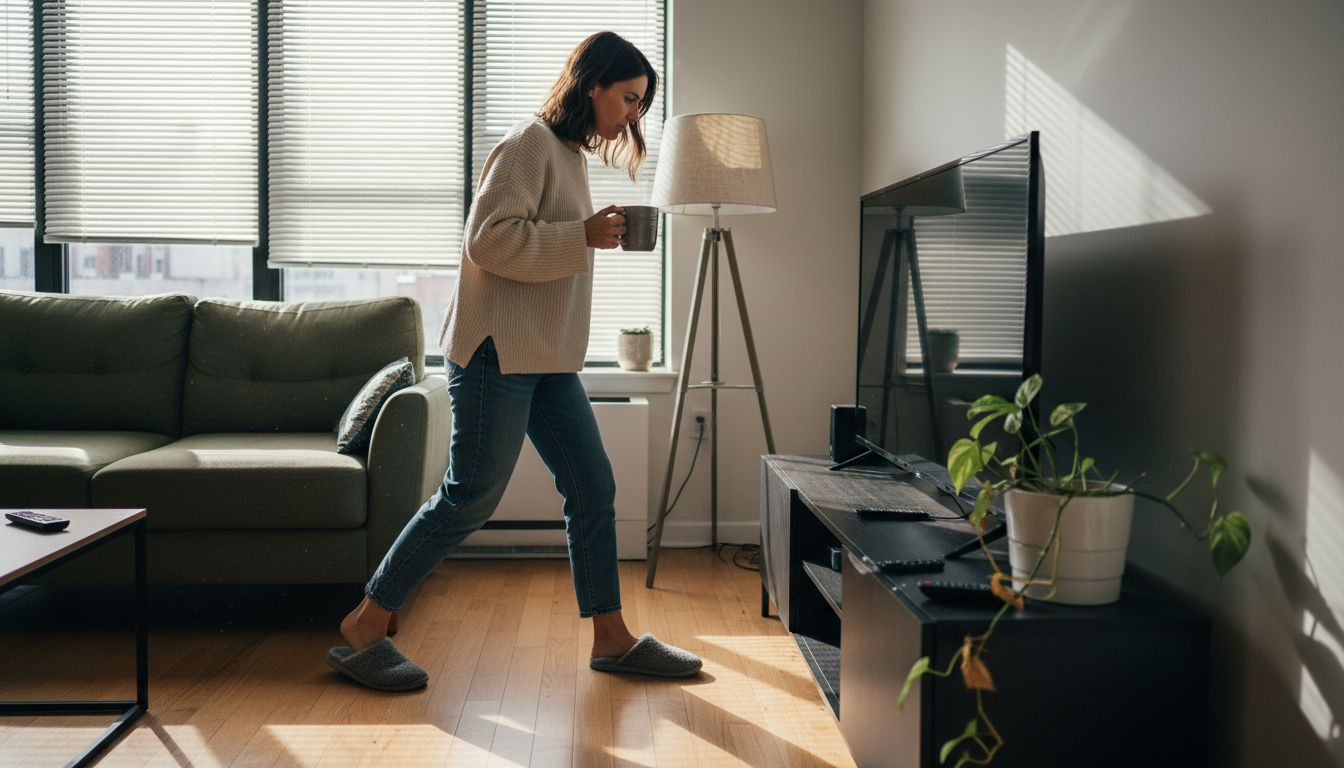
Navigation matters more in small spaces. A narrow corridor with furniture blocking the way creates frustration daily. Clear pathways from the entrance through the room to different zones feel spacious and purposeful.
Maintain at least 18 inches of walking space between furniture pieces. When someone navigates your living room, they shouldn’t squeeze past anything.
The Invisible Grid
Professional designers use an invisible grid to space furniture evenly. Don’t push everything to walls or cluster it all in the center. Distribute pieces to create visual balance and breathing room.
Spacing patterns to consider:
- 3 to 4 feet between seating pieces in conversation zones
- 8 to 10 feet viewing distance from seating to TV or focal point
- 2 to 3 feet between the sofa and coffee table
- Unequal spacing between elements feels more intentional than uniform spacing
How Small Moves Create Big Impact
Moving your sofa 12 inches can transform how a room feels. Angling a chair toward conversation instead of parallel changes social dynamics. Floating furniture away from walls makes tight spaces paradoxically feel larger.
Proper spatial planning reduces discomfort and supports positive interaction by maintaining optimal distances between people.
Traffic Flow Patterns
Trace imaginary paths from your front door, to the kitchen, to bedrooms. Your furniture should never block these natural routes. Dead-end seating areas that require backtracking frustrate daily.
Test your layout by walking through it physically. If you bump furniture or feel blocked, adjust before committing.
Pro tip: Use painter’s tape on your floor to map out furniture placement at actual scale before moving pieces, testing traffic patterns and conversational zones without physical effort.
Common Mistakes When Planning Furniture
Most people make the same furniture arrangement errors repeatedly. These mistakes waste money, create uncomfortable spaces, and lead to constant rearranging. Learning what goes wrong helps you avoid the frustration.
The good news? These mistakes are fixable once you recognize them.
Overcrowding the Space
This is the #1 mistake in small apartments. Adding “just one more chair” or “that small side table” gradually chokes your living room. Soon you’re navigating an obstacle course instead of relaxing.
Resist the urge to fill every empty corner. Your space needs room to breathe. Fewer, larger pieces typically work better than many small ones in tight quarters.
Ignoring Traffic Flow
Common mistakes include poor traffic flow and neglecting how people actually move through your apartment. You arrange furniture perfectly for a magazine photo, but daily life reveals the problem—you constantly bump your shins on a coffee table.
Traffic flow errors:
- Blocking the most direct path from entrance to kitchen
- Creating dead-end seating that requires backtracking
- Placing furniture where doors swing into it
- Forcing people to squeeze past pieces
Forgetting Room Function
Your living room needs to serve a purpose. Is it primarily for entertaining? Working from home? Watching movies? Lounging with a book? The answers determine layout decisions.
When you skip this step, you end up with furniture pointing the wrong direction or pieces that don’t work together functionally.
Poor Conversation Zone Setup
Furniture scattered at random angles prevents conversation. People can’t see or hear each other properly. A defined conversation zone with seating facing each other costs nothing but planning.
Create this by arranging seating pieces in a loose rectangle or circle, not a straight line against walls.
Neglecting Your Room’s Actual Dimensions
Many people imagine how furniture will fit without measuring. A sofa that seemed small in a showroom dominates your living room. Or a coffee table you loved blocks half the walkway.
Measure everything: room dimensions, furniture dimensions, doorways, window placements, radiators, electrical outlets. Your apartment’s quirks matter.
Ignoring Light and Windows
Placing a sofa directly in front of your only window wastes natural light and creates a dark, cave-like atmosphere. Windows are assets—work with them, not against them.
Mismanagement of spatial relationships produces inefficiency and discomfort, underscoring the need for systematic layout planning.
Pro tip: Move only one piece at a time and live with the new arrangement for 3-4 days before deciding if it works, giving yourself time to notice real friction points rather than reacting to initial visual impressions.
Refer to this summary of common furniture arrangement errors and their consequences:
| Mistake Type | Description | Resulting Issue |
|---|---|---|
| Overcrowding | Too many pieces, no breathing room | Increases stress, blocks paths |
| Poor Traffic Flow | Blocks walkways or doors | Daily frustration, trip hazards |
| Ignoring Room Function | No clear purpose or focal point | Inefficient use, wasted space |
| Neglecting Measurements | No precise sizing or planning | Oversized pieces, bad layout |
| Blocking Windows | Furniture covers natural light | Dark, uncomfortable atmosphere |
Benefits for Comfort, Style, and Flexibility
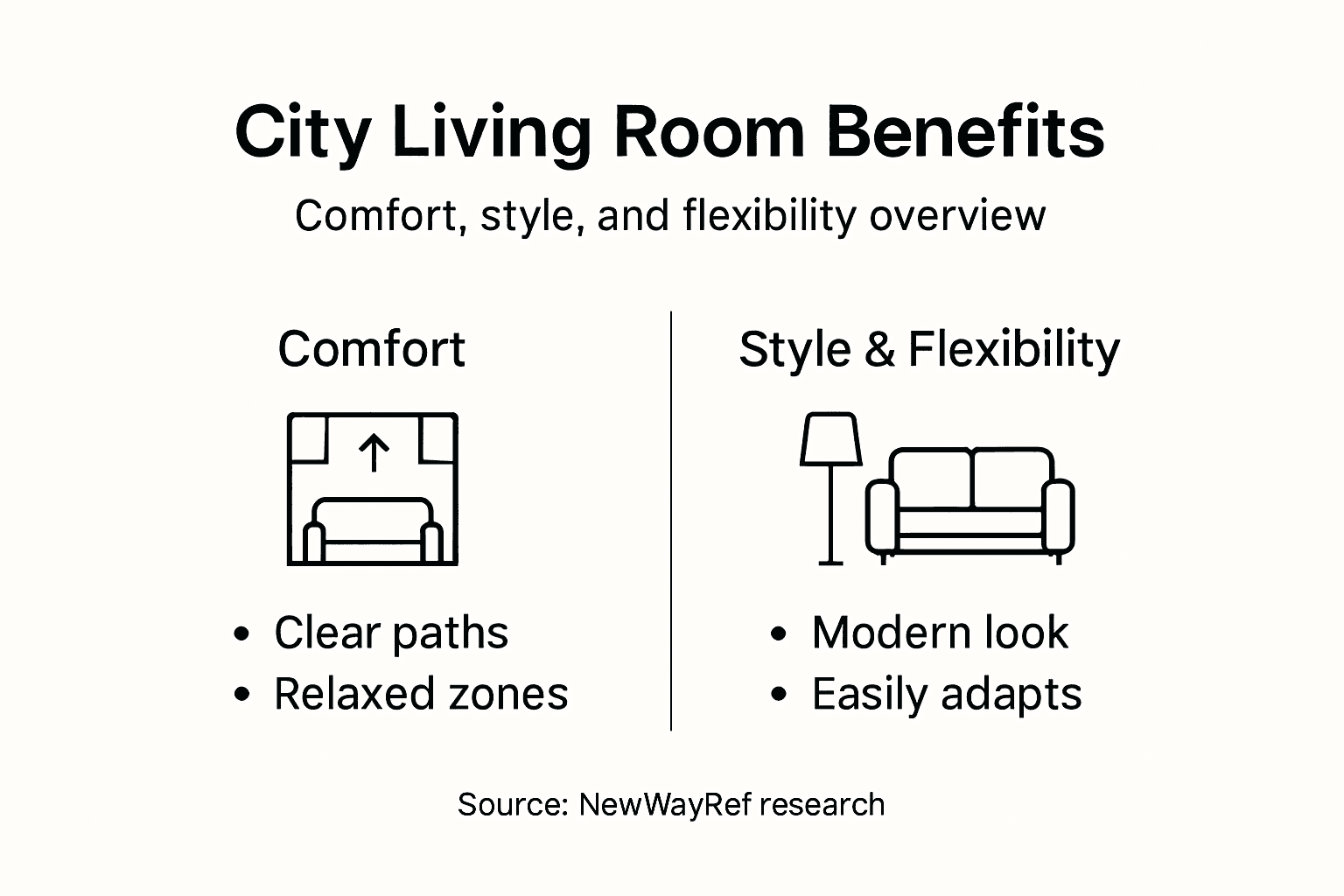
Optimizing your living room layout pays dividends across three critical areas. You get a more comfortable space where you actually want to spend time. Your apartment looks intentional and put-together. And you gain flexibility to adapt as your life changes.
These benefits compound over time, transforming how you experience your home daily.
Comfort That Actually Matters
A well-planned layout makes your living room a refuge instead of a frustration. Proper furniture placement means pathways work naturally, conversation happens without strain, and you’re not constantly bumping into things.
Optimizing layout enhances functionality and comfort by aligning furniture with how you actually live. You sit comfortably with clear sightlines. You move through the space without obstacles. The room temperature distributes evenly because furniture doesn’t block airflow.
Comfort improvements include:
- Reduced physical strain from awkward seating or navigation
- Better acoustics for conversation and entertainment
- Improved air circulation and temperature control
- Mental ease from intentional, uncluttered arrangement
Style That Reflects Your Taste
Styleish living rooms aren’t accidents—they result from thoughtful placement and balance. When furniture floats purposefully rather than clinging to walls, your space feels designed, not makeshift.
Contemporary furniture selections combined with strategic layout maximize visual appeal and modern aesthetics. Balanced composition means nothing dominates while everything contributes to the overall look.
Flexibility for Changing Needs
Your life evolves. You work from home some days, entertain occasionally, then need more lounge space. A flexible layout adapts without gutting the whole design.
Create adaptable zones by:
- Using lightweight furniture you can move easily
- Choosing modular pieces that reconfigure
- Designing multiple seating options for different activities
- Planning open floor space for rearrangement
Health and Well-Being
Ergonomic design and flexible layouts contribute to physical and psychological well-being in city living. Better air quality, thermal comfort, and reduced stress from a well-organized space have measurable impacts on your health.
Small apartments benefit most from optimization—every inch affects your daily experience.
A thoughtfully planned layout creates spaces more durable and enjoyable, adapting to your changing needs without constant redesign.
Investment in Your Quality of Life
Optimizing your living room isn’t about perfection. It’s about creating a space that works for you—comfortable, attractive, and adaptable. This single room impacts how you feel daily.
Pro tip: Photograph your current layout from multiple angles, then sketch proposed changes on printed photos to visualize improvements before committing to physical rearrangement.
Transform Your City Living Room with Smart Furniture Choices
Optimizing your living room layout for city life means finding the perfect balance between comfort, style, and function in limited space. If overcrowding and poor traffic flow keep your apartment from feeling like a true home, it is time to rethink your environment with carefully selected furniture and decor. Embrace concepts like functional accessibility and visual balance by starting with key pieces such as sofas and coffee tables designed for urban living.
Explore our curated collection of modern and stylish furniture at NewWayRef Store, where you can find everything from space-saving sofas to elegant coffee tables and versatile home accessories. Enjoy free shipping on orders over $50 and create a living space that supports both your city lifestyle and personal comfort. Start your journey to a better living room layout and shop today to experience how intentional design can improve your daily life.
Frequently Asked Questions
What is living room layout optimization?
Living room layout optimization involves strategically arranging furniture and decor to make the most of function and style in urban spaces, ensuring clear pathways and comfort.
Why does layout matter in small urban apartments?
In small apartments, poor layout choices can create cramped spaces, hinder movement, and lead to an uncomfortable living environment. Optimization allows for effective use of limited square footage.
What common mistakes should I avoid when arranging furniture in my living room?
Common mistakes include overcrowding the space, ignoring traffic flow, and neglecting to consider the room’s function. These can lead to frustration and inefficient use of space.
How can I improve comfort and flexibility in my living room layout?
To improve comfort and flexibility, ensure clear pathways for movement, select multi-functional furniture, and create adaptable zones that can easily be rearranged for different activities.