

Every square foot counts when you call a city apartment or compact townhouse home. Urban living means making style-conscious decisions that reflect your personality without overwhelming the space. Taking time to assess your unique layout and define your interior design style is the first key step to achieving a living room that balances modern appeal with genuine comfort. This guide reveals practical strategies for combining function and beauty, so your space feels sophisticated, organized, and distinctly yours.
Table of Contents
- Step 1: Assess Space and Define Your Style
- Step 2: Select Furniture for Function and Flow
- Step 3: Add Decor and Layer Accessories
- Step 4: Incorporate Lighting for Ambiance
- Step 5: Review and Adjust for Cohesion
Quick Summary
| Key Insight | Explanation |
|---|---|
| 1. Assess Your Space First | Measuring room dimensions and noting features prevents mistakes and aids in visualization. |
| 2. Define Your Personal Style | Create a mood board with images that inspire you to clarify your design preferences. |
| 3. Choose Functional Furniture | Select pieces that fit your lifestyle and room size while ensuring comfort and easy movement. |
| 4. Use Layered Lighting | Combine ambient, task, and accent lighting to create a versatile and inviting atmosphere. |
| 5. Ensure Cohesion and Balance | Review your space for visual harmony, making small adjustments to unify colors and textures. |
Step 1: Assess Space and Define Your Style
Before you purchase a single piece of furniture, take time to understand your living room and what style resonates with you. This foundation determines every design decision that follows, from color choices to furniture placement.
Start by examining your actual space. Measure the room dimensions, note natural light sources, and identify architectural features like fireplaces or built-in shelving. Understanding your layout prevents costly mistakes and helps you visualize how pieces will fit.
Next, assess these practical elements:
- Room size and shape: Tight square footage demands multi-functional pieces; larger rooms allow for distinct zones
- Lighting conditions: Bright, sunny spaces complement different color palettes than dim rooms
- Existing elements: Flooring, wall color, and permanent fixtures shape your design direction
- Traffic flow: Identify how people move through the space to position furniture strategically
Your living room’s physical constraints aren’t limitations—they’re the framework that guides your style choices and ensures function matches form.
Now for the creative part: defining your personal style. Identifying your design style goes beyond liking what looks pretty. Spend time gathering inspiration from different sources—Instagram, design magazines, showrooms—and save images that appeal to you.
Look for patterns in your saved inspiration. Do modern, minimalist spaces draw you in? Are you attracted to bohemian warmth? Scandinavian simplicity? Your authentic preferences will emerge through honest observation rather than forcing yourself into a trend.
Create a quick mood board, even just on your phone. Collect 10 to 15 images representing colors, textures, and overall vibes you love. This visual reference keeps you grounded when making purchasing decisions.
To help you define your living room style, here’s a comparison of popular interior design aesthetics:
| Style Type | Key Visual Elements | Color Palette | Feeling Evoked |
|---|---|---|---|
| Modern Minimalist | Clean lines, open spaces | Neutrals, bold accents | Calm, uncluttered |
| Bohemian | Layered textures, eclectic | Warm earth tones | Cozy, artistic |
| Scandinavian | Light woods, soft fabrics | Whites, natural hues | Airy, relaxed |
| Contemporary | Sleek finishes, balanced | Grays, whites, blacks | Sophisticated, dynamic |
Pro tip: Take photos of your empty room from multiple angles in natural light, then overlay your inspiration images to see how styles actually translate in your specific space rather than assuming a design will work based on a magazine photo alone.
Step 2: Select Furniture for Function and Flow
Now that you understand your space and style, it’s time to choose pieces that work hard for your lifestyle. The best furniture balances aesthetics with practicality, ensuring your living room feels both beautiful and livable.
Start by measuring your space accurately. Grab a tape measure and note doorways, windows, and existing fixtures. This prevents the frustration of falling in love with a sofa only to discover it won’t fit through your entry. Sketch a rough floor plan or use your phone to photograph dimensions.
Next, identify your room’s primary purpose. Do you host gatherings? Work from home? Watch movies? Your answer shapes furniture priorities. A family that entertains needs comfortable seating for multiple people, while remote workers might prioritize a side table for a laptop.
Consider these functional elements:
- Seating capacity: How many people realistically gather in your space?
- Storage needs: Do you require shelving for books, electronics, or decor?
- Multi-functional pieces: Ottoman benches, nesting tables, and storage sofas maximize small footprints
- Scale and proportion: Oversized pieces overwhelm tight rooms; undersized furniture looks awkward in larger spaces
Choosing contemporary furniture styles designed with modern functionality ensures every piece earns its place through both form and use.
Now arrange furniture around a clear focal point, typically a fireplace or TV. Position your main seating to face this anchor, creating natural conversation zones. Furniture arrangement that supports traffic flow prevents navigating obstacles while moving through the room.
Leave breathing room between pieces. Cramming furniture wall-to-wall creates a cluttered feel and actually makes small spaces seem smaller. Aim for at least 18 inches between seating elements for comfortable interaction.
Add layers of function with accent tables within arm’s reach of seating and strategically placed lighting. These elements enhance comfort while keeping your layout organized and intentional.
Pro tip: Create a scaled floor plan on graph paper or use a room planner app before purchasing anything, testing different layouts and furniture sizes digitally to avoid expensive mistakes.
Step 3: Add Decor and Layer Accessories
With furniture in place, it’s time to infuse personality through thoughtfully curated decor and accessories. These finishing touches transform a functional room into a stylish, inviting space that reflects who you are.
Start with a neutral base. Your walls, major furniture, and larger pieces should provide calm backdrop. This anchors your space and allows accessories to shine without overwhelming the eye. Soft grays, whites, or warm beiges create the perfect canvas.
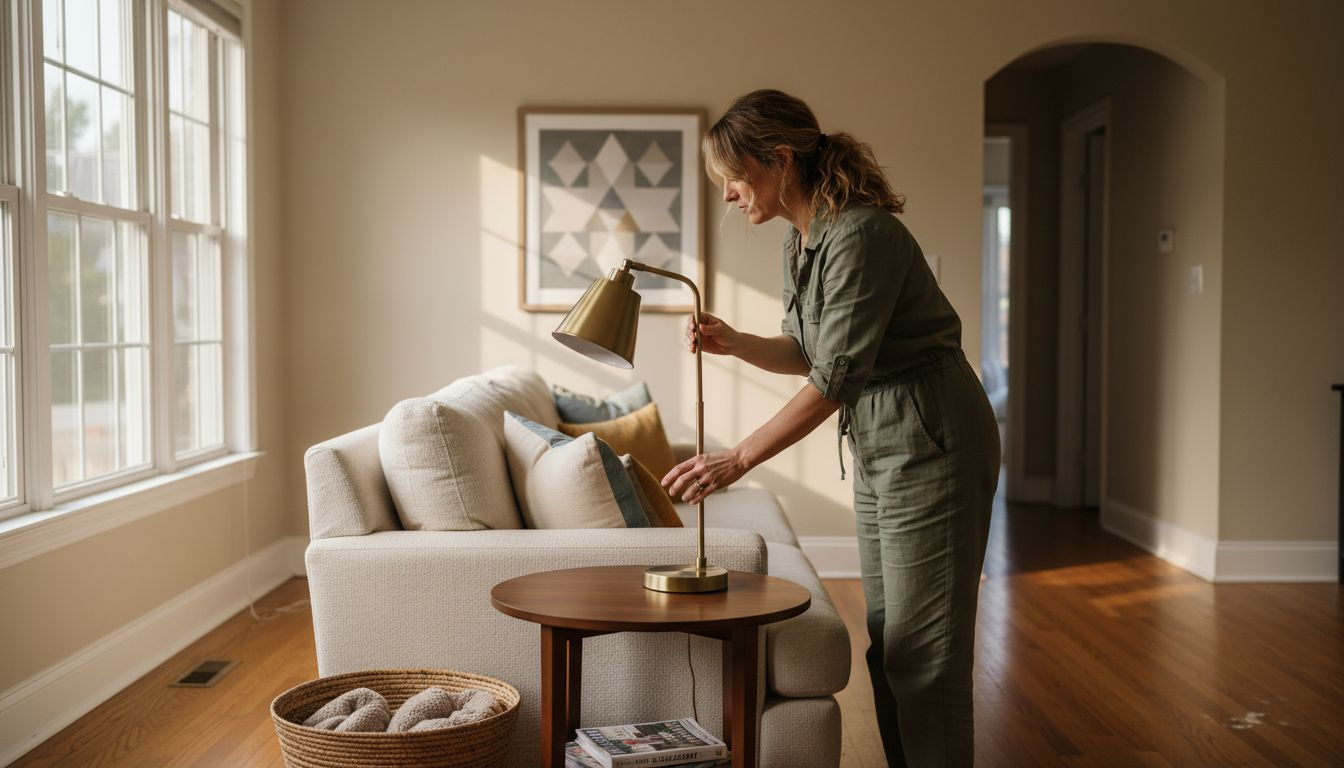
Now build visual interest by grouping accessories in vignettes. Rather than scattering items randomly, cluster them in intentional arrangements. A console table might display a framed photo, a sculptural object, and a small plant together. This creates focal points that feel curated rather than accidental.
Consider these layering strategies:
- Textiles: Throw pillows, blankets, and area rugs add warmth and texture
- Artwork: Original pieces, prints, or gallery walls showcase your taste
- Personal items: Family photos and meaningful objects tell your story
- Books and decor objects: These combine function with visual appeal
- Lighting accents: Table lamps and decorative fixtures serve both purposes
Strategic use of home accessories creates layered depth that transforms your space from sparse to sophisticated without clutter.
Pay attention to scale and balance. A single large mirror can anchor a wall, while smaller frames work better grouped together. Vary heights by mixing tall vases with low dishes and stacked books. This variation keeps your eye moving and maintains visual interest.
Incorporate varied textures to add richness. Pair smooth ceramics with woven baskets, glossy surfaces with matte finishes, and soft fabrics with hard materials. This tactile variety makes your space feel alive and inviting.
Remember that less is more. Every piece should earn its place through beauty or meaning. A room stuffed with accessories feels chaotic, while thoughtfully spaced decor feels intentional and modern.
Pro tip: Step back frequently as you style, viewing your room from the doorway to catch overcrowding before it happens, and move pieces around multiple times to find the arrangement that feels most balanced.
Step 4: Incorporate Lighting for Ambiance
Lighting transforms a living room from functional to fabulous. Strategic placement of different light sources creates depth, highlights your decor, and sets the mood for any occasion.
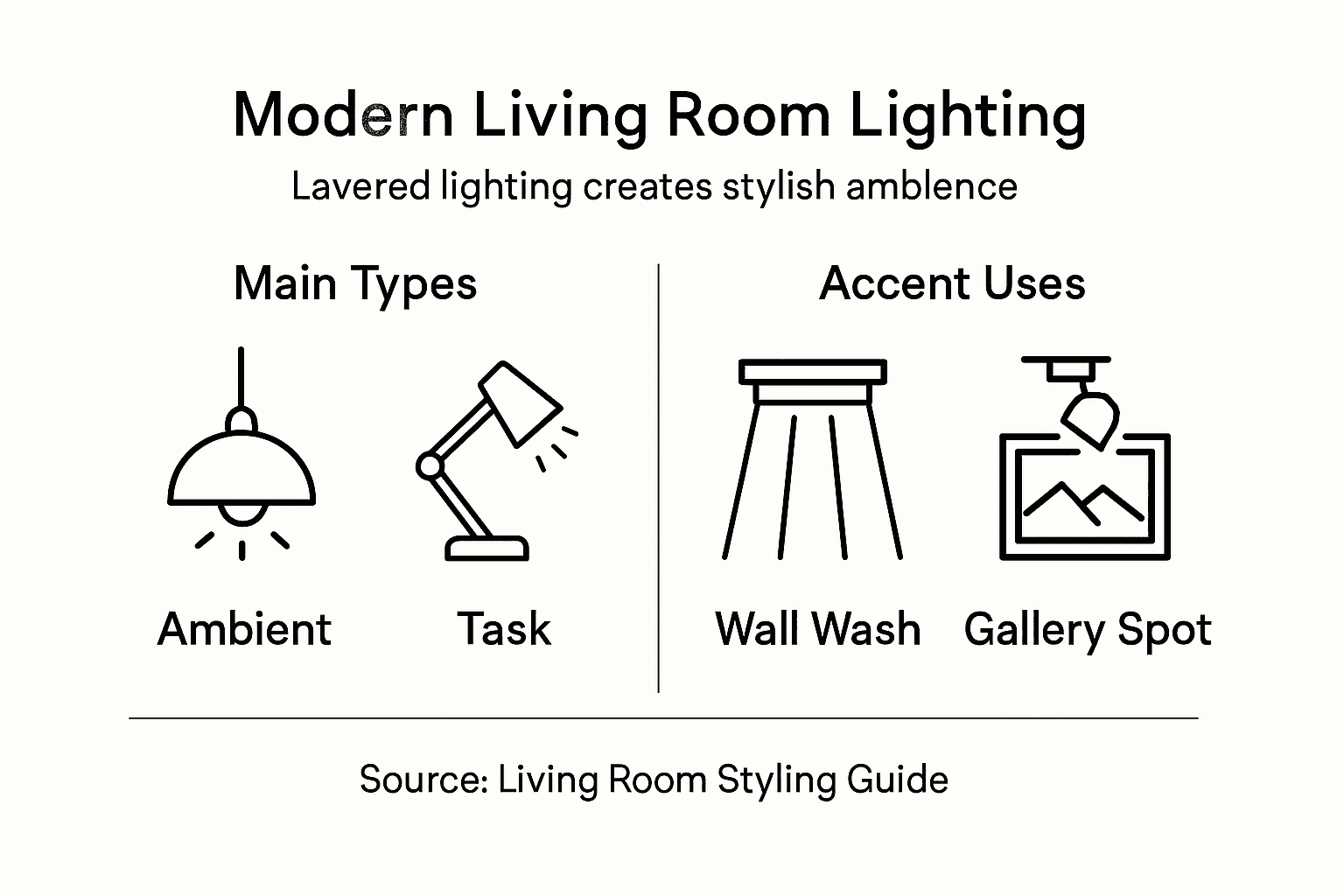
Think in layers. Your lighting design should combine three types: ambient, task, and accent lighting. Ambient lighting provides overall illumination, typically from ceiling fixtures or chandeliers. Task lighting handles specific activities like reading or working, often from table lamps or floor lamps. Accent lighting highlights artwork or architectural features, adding visual drama.
Start with a strong ceiling fixture as your anchor. A statement chandelier or modern pendant light serves as both functional light source and design focal point. This overhead element sets the tone for your entire space.
Add layers with these lighting components:
- Table lamps: Position on side tables and console surfaces for ambient warmth
- Floor lamps: Place in corners or beside seating to fill dark areas
- Wall sconces: Install on either side of artwork or mirrors for balanced lighting
- Accent lights: Use spotlights or directed fixtures to showcase decor elements
- Dimmable controls: Allow flexibility to adjust brightness based on activity and mood
Thoughtful lighting design enhances both ambiance and function, transforming your space from bright and energetic to warm and intimate depending on the moment.
Consider color temperature carefully. Warm white lights (2700K to 3000K) create cozy, inviting atmospheres perfect for relaxation. Cool white lights (4000K and above) feel more energetic and work better for task areas. Mix temperatures throughout your room for versatility.
Position lighting to avoid harsh shadows and glare. Aim lights toward walls and decor rather than directly into seating areas. This indirect approach feels softer and more sophisticated while still illuminating your space effectively.
Dimmable fixtures give you maximum control. Even ambient lights become flexible when you can adjust brightness. You’ll use the same space differently at night versus during daytime work or entertaining.
Pro tip: Install lighting on separate switches or use smart bulbs so you can control different layers independently, creating custom lighting scenes for various activities without rewiring your entire room.
Here’s a quick summary of lighting types and their primary purposes for your living room:
| Lighting Type | Main Role | Best Placement | Mood Created |
|---|---|---|---|
| Ambient | Overall room illumination | Ceiling fixtures | Bright and open |
| Task | Focused activity lighting | Table/floor lamps | Practical, energetic |
| Accent | Highlights features/artwork | Spotlights, sconces | Dramatic, inviting |
Step 5: Review and Adjust for Cohesion
You’ve assembled furniture, layered in accessories, and created lighting layers. Now step back and assess whether everything works together as a unified whole. This review phase catches visual disconnects and ensures your space feels intentional rather than random.
Walk through your living room slowly. Stand in the doorway and observe the overall impression. Does your eye move naturally around the room, or does it get stuck on jarring contrasts? Notice whether colors, textures, and styles feel harmonious or chaotic.
Evaluate these cohesion elements:
- Color palette: Do your accent colors repeat throughout the space, or do isolated pieces feel disconnected?
- Texture variety: Is there a mix of soft and hard surfaces, or does everything feel monotonous?
- Scale consistency: Are furniture and decor pieces appropriately sized relative to each other and your room?
- Style alignment: Do all pieces support your chosen design aesthetic, or do outliers feel out of place?
- Visual flow: Can you trace a path your eye naturally follows, or does it jump erratically?
Creating visual harmony through consistent design elements means repeating colors, textures, and materials strategically so each piece supports the whole rather than competing for attention.
Make intentional adjustments. If one accent color appears only once, repeat it elsewhere through a pillow, artwork, or decor object. If you have too many different wood tones, replace one or two pieces with items that match your primary finish. Small tweaks create big impact.
Balance uniformity with personality. Your space shouldn’t feel sterile or like a showroom. Aim for cohesion that still allows individual pieces to express character and meaning. Personal photos and meaningful objects should enhance, not disrupt, your overall design.
Consider layering textures intentionally. Pair smooth surfaces with woven elements, combine matte and glossy finishes, and mix soft fabrics with hard materials. This variety within harmony keeps your space visually interesting.
Step back again from different angles and in different lighting conditions. Your space should feel welcoming and well-planned whether viewed in morning sunlight or evening lamplight.
Pro tip: Take photos of your completed room from multiple angles and view them on your phone over several days, noticing what your eye naturally gravitates toward and what feels off, then make final adjustments based on these observations.
Elevate Your Living Room with Stylish Essentials from New Way Ref
Designing a modern and stylish living room requires the perfect balance of functional furniture and thoughtful decor. If you found yourself weighing options for cohesive color palettes, lighting layers, and furniture arrangements that enhance both comfort and visual flow, New Way Ref has the curated pieces to bring your vision to life. From sleek sofas that complement contemporary aesthetics to versatile lighting solutions that create the perfect ambiance, every item is selected to help you avoid design pitfalls and maximize your space.
Discover our extensive selection within the Home & Kitchen, Home Decor, and Lighting collections. Act now to enjoy free shipping on orders over $50 and take the next step toward creating a cohesive, inviting living room that reflects your unique style. Visit New Way Ref today and start transforming your living space into a modern retreat.
Frequently Asked Questions
How do I assess my living room space before styling?
Start by measuring your room dimensions, noting natural light sources and architectural features. This will help you visualize how different furniture pieces will fit, preventing costly mistakes during your design process.
What are some key elements to consider when choosing furniture for my living room?
Focus on your room’s primary purpose and prioritize functionality in your selections. For example, if you frequently entertain, aim for ample seating and consider multi-functional furniture pieces, such as storage ottomans.
How can I create a cohesive color palette for my living room?
Start with a neutral base for your larger furniture and wall colors, then incorporate accent colors through accessories. Aim to repeat these accent colors in different areas of the room to unify your design, such as through pillows or artwork.
What types of lighting should I include in my living room?
Incorporate ambient, task, and accent lighting to create a well-lit and inviting atmosphere. For example, you might start with a central ceiling fixture for overall light and add table lamps beside seating to create cozy task lighting for reading.
How do I layer accessories without making my living room feel cluttered?
Curate your accessories into intentional groups, or vignettes, that create focal points and visual interest. Ensure that each piece has meaning or beauty, and step back frequently to check for balance and openness in your arrangements.
What are key strategies for reviewing and adjusting my living room design?
Step back and assess the room from different angles, checking for visual harmony among colors, textures, and styles. Make small adjustments, such as repositioning decor items or changing out a color in an accessory, to enhance cohesion and flow throughout the space.