

Struggling to find lighting that looks sleek, adapts to your routine, and helps reduce energy costs at the same time? The latest wave of modern home lighting seamlessly blends style and technology for flexible, eco-friendly spaces that match your personality. With features like LED efficiency, smart connectivity, and minimalist design, you get lighting that not only fits your décor but responds to your needs, all while keeping bills low and comfort high.
Table of Contents
- Defining Modern Home Lighting Solutions
- Comparing Key Types and Technologies
- Essential Features for Contemporary Homes
- Energy Efficiency and Smart Connectivity
- Common Mistakes in Lighting Placement
Key Takeaways
| Point | Details |
|---|---|
| Energy Efficiency | Modern lighting, especially LED systems, use significantly less energy and last much longer than traditional options. |
| Smart Connectivity | Smart lighting controls allow for remote management and customization of lighting settings based on personal preferences. |
| Layered Lighting | Employing a combination of general, task, and accent lighting creates a more inviting and functional home environment. |
| Avoid Common Mistakes | Planning your lighting layout carefully can prevent pitfalls like over-reliance on single-source lighting and poor fixture choices. |
Defining Modern Home Lighting Solutions
Modern home lighting solutions combine LED technology, smart controls, and sustainable design to create spaces that look great while saving energy. Unlike traditional lighting setups, today’s systems adapt to your lifestyle, mood, and needs with just a tap on your phone or voice command.
Advanced digital controls and IoT technologies have transformed how homeowners interact with their lighting environments. You’re no longer stuck with one brightness level or one color temperature for your entire home.
What exactly defines modern lighting solutions? Here are the core characteristics:
- LED efficiency: Uses 75% less energy than incandescent bulbs and lasts 25 times longer
- Smart connectivity: Control lights remotely, set schedules, and create custom scenes
- Minimalist design: Clean lines and streamlined fixtures that blend seamlessly into décor
- Modular flexibility: Adaptable systems that work in new homes and renovations alike
- Sustainable materials: Eco-friendly components aligned with contemporary values
The shift toward LED technology, minimalist elegance, and environmentally sustainable materials reflects what homeowners actually want today. You’re looking for lighting that functions beautifully, doesn’t spike your electricity bill, and fits your modern aesthetic.
Smart systems elevate this further by enabling remote management of individual lights or entire rooms. Imagine setting a relaxing warm-white scenario for evening entertainment or bright, energizing light for morning routines—all customizable to your preferences.
Cordless and modular designs represent another major shift. These systems adapt to various rooms and applications without requiring extensive rewiring, making upgrades possible whether you’re decorating a new apartment or refreshing an existing space.
Modern lighting solutions merge technology with style, giving you control over both function and atmosphere in every room.
The real appeal? You get flexibility, energy savings, and a home that genuinely reflects your personal style. No more settling for generic overhead lighting or bulky fixtures that clash with your décor.
Pro tip: Start by upgrading high-use areas like your bedroom or living room with smart LED bulbs—you’ll see immediate energy savings and experience the convenience before investing in a complete system overhaul.
Comparing Key Types and Technologies
Not all lighting technologies are created equal. Your choice impacts energy bills, how your home looks, and how long you’ll wait before replacing bulbs. Understanding the differences helps you make smart decisions for each room.
Incandescent bulbs were the standard for decades, but they’re energy hogs. They convert only about 5% of energy into light and the rest into heat. They also burn out frequently, requiring constant replacements.
Halogen lamps improve slightly on incandescent by running hotter and lasting a bit longer. However, they still waste significant energy and generate considerable heat, making them less practical for modern homes.
Fluorescent and CFL options offer moderate efficiency gains. CFLs contain mercury, though, which means careful disposal is required—they can’t just go in regular trash. They also take time to reach full brightness.
LEDs provide energy-efficient, long-lasting, and high-quality lighting that outperforms all other options. They last 25,000+ hours, use minimal electricity, and emit virtually no heat. For most homeowners, LEDs are the obvious choice.
Here’s how the main technologies stack up:
| Technology | Lifespan | Energy Use | Heat Output | Cost |
|---|---|---|---|---|
| Incandescent | 1,000 hours | High | Very High | Low |
| Halogen | 2,000-3,000 hours | High | High | Low |
| CFL | 8,000-10,000 hours | Moderate | Low | Moderate |
| LED | 25,000+ hours | Very Low | Minimal | Moderate |
Beyond basic technology, you’ll also need to consider application types. Common lighting strategies include general, task, and accent lighting for different purposes.
- General lighting: Overhead fixtures that illuminate entire rooms
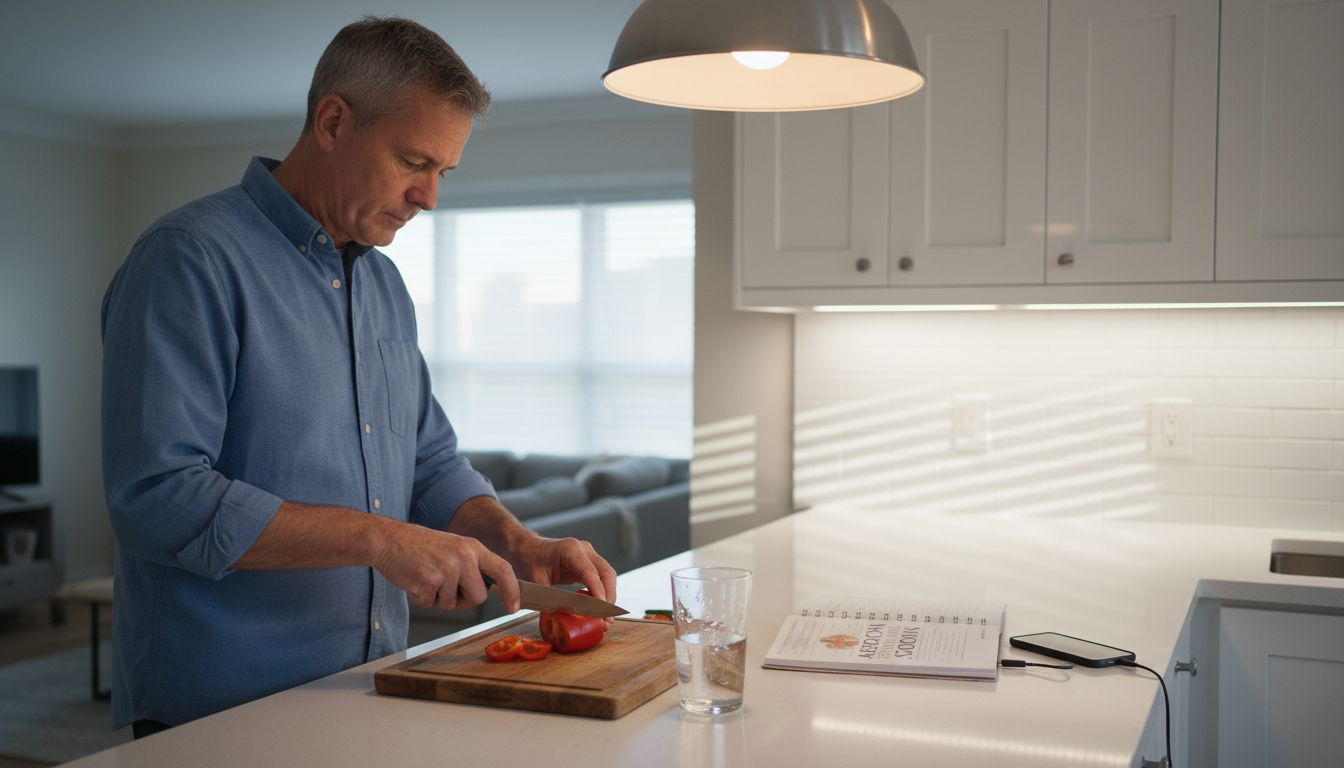
- Task lighting: Focused light for reading, cooking, or working
- Accent lighting: Decorative light that highlights artwork or architectural features
Smart lighting takes this further by letting you switch between these modes instantly. One fixture can provide bright work light during the day and warm ambiance for evening relaxation.
To better understand where to use different lighting strategies, see this overview of lighting types by room:
| Room Type | Recommended Lighting | Key Benefit |
|---|---|---|
| Living Room | Layered (general + accent) | Flexible, cozy atmosphere |
| Kitchen | Task + general lighting | Safe food prep, clear vision |
| Bedroom | Dimmable, warm LEDs | Relaxing, restful sleep |
| Bathroom | Bright, even task light | Flawless grooming, safety |
| Hallway | Sensors, low-level LEDs | Safe passageway, energy saving |
LED technology with smart controls gives you the best energy efficiency and flexibility—choose this combination for maximum benefit.
When comparing options, focus on lumens (brightness) rather than wattage. Older lighting measured power consumption; modern lighting measures actual light output. A 10-watt LED produces the same brightness as a 60-watt incandescent.
Pro tip: Replace your five most-used light fixtures with LEDs first—you’ll recoup the investment through energy savings in under a year while experiencing the immediate quality difference.
Essential Features for Contemporary Homes
Modern lighting goes beyond just brightness. Contemporary homes demand features that save energy, adapt to your lifestyle, and complement your design aesthetic. The best systems combine smart controls, efficiency, and visual appeal.
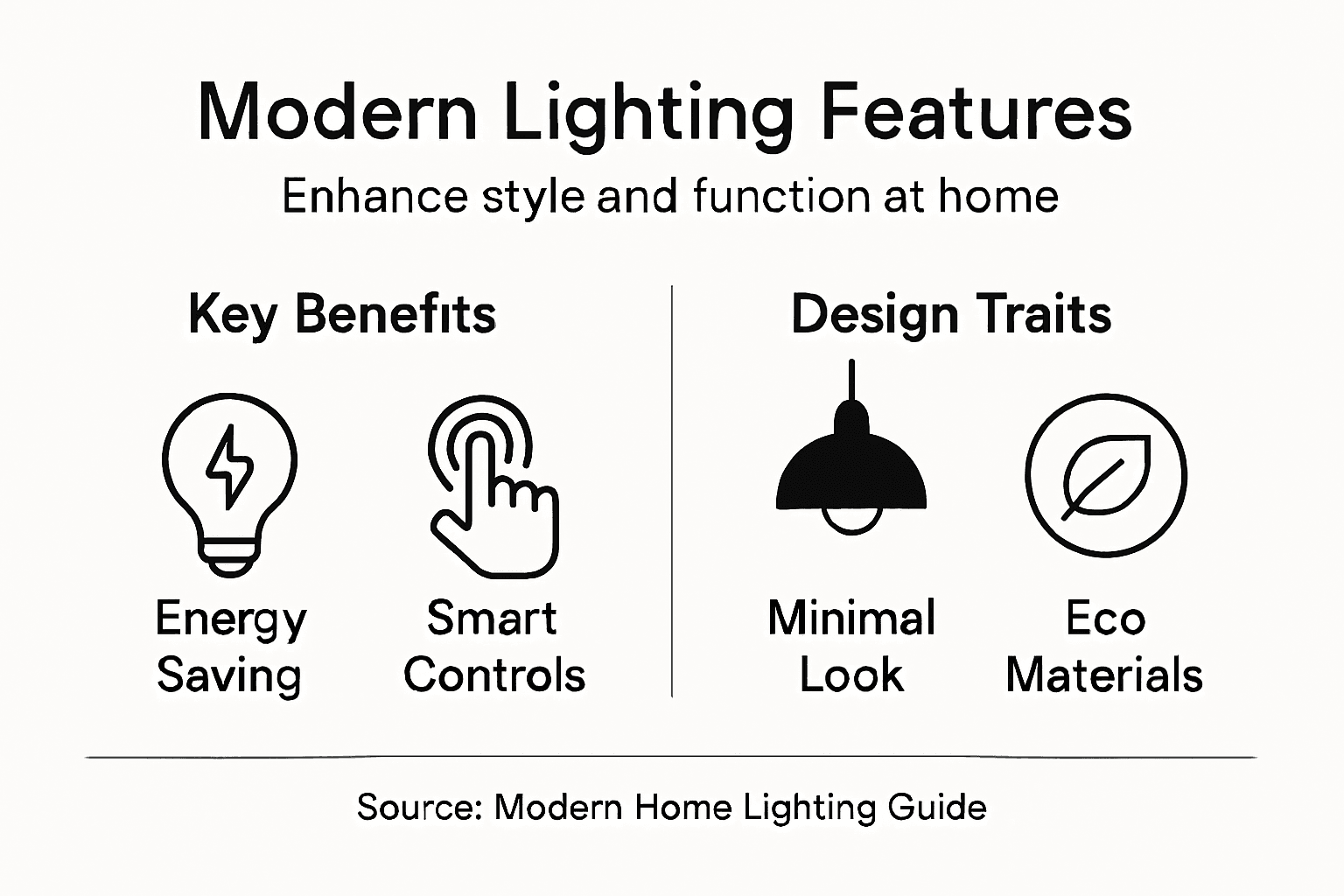
Energy efficiency sits at the core of contemporary lighting design. LED bulbs use 75% less electricity than incandescent options, translating to real savings on monthly utility bills. They also generate minimal heat, reducing cooling costs in warm climates.
Sustainability matters in today’s homes. Contemporary design philosophy emphasizes eco-friendly materials and responsible manufacturing. Choosing recyclable fixtures and long-lasting LEDs aligns with values that many homeowners share.
Control systems like occupancy sensors, daylight sensors, dimmers, and networked controls enable optimized performance tailored to your needs. These features work together to create intelligent lighting environments.
Here’s what makes a contemporary lighting system truly functional:
- Occupancy sensors: Automatically turn lights on and off based on room use
- Daylight sensors: Adjust artificial light based on natural sunlight levels
- Dimmers: Fine-tune brightness for different moods and activities
- Smart connectivity: Control lights via smartphone or voice commands
- Scheduling: Set lighting patterns that match your daily routines
These features reduce energy waste while improving your daily experience. Imagine lights automatically dimming when sunset bathes your living room in natural light, or brightening when you enter a dark kitchen at 6 AM.
Human-centric design ensures your lighting enhances both comfort and safety. Contemporary homes prioritize visual comfort through proper brightness levels and reduced glare. This means less eye strain during reading or computer work.
Architectural lighting—strategically placed accent lights that highlight design features—elevates your space aesthetically. A well-lit bookshelf or artwork becomes a focal point, adding depth and interest to rooms.
When selecting fixtures for contemporary spaces, understanding contemporary style principles helps you choose pieces that harmonize with your overall design vision.
Smart lighting controls transform how homes function, delivering comfort, savings, and style in one integrated system.
Safety and accessibility matter too. Contemporary lighting standards ensure adequate illumination for stairs, entryways, and work areas. Dimmers and color temperature controls accommodate different ages and visual needs within your household.
Pro tip: Install smart bulbs in your most-used fixtures first—you’ll gain immediate benefits from scheduling and dimming capabilities while learning which features matter most for your lifestyle.
Energy Efficiency and Smart Connectivity
Smart lighting systems work by combining sensors, daylight data, and intelligent algorithms to minimize energy waste. Your lights adjust automatically based on occupancy, natural sunlight, and your personal preferences—without you lifting a finger.
Precise control over brightness, color, and timing using sensor data and daylight harvesting dramatically reduces electricity consumption compared to traditional fixed lighting. These systems track real-time conditions and adapt instantly.
Here’s how the efficiency gains work in practice:
- Daylight harvesting: Sensors detect natural light and dim artificial lights automatically
- Occupancy detection: Motion sensors turn lights off when rooms are empty
- Scheduling: Program specific brightness levels for different times of day
- Adaptive algorithms: Systems learn your patterns and optimize energy use over time
The energy savings are measurable. Smart lighting systems can reduce consumption by 20-40% compared to conventional setups, depending on your home’s layout and usage patterns.
Connectivity is the backbone enabling all this intelligence. Adaptive communication protocols and interference management support robust IoT device integration in modern homes, allowing seamless control across multiple rooms and fixtures.
Your smartphone becomes your lighting remote. Control brightness, color temperature, and scheduling from anywhere. Create scenes for different moods—energizing white light for morning workouts, warm amber tones for evening relaxation.
Voice control adds another convenience layer. Simply ask your smart assistant to dim lights, turn specific rooms on or off, or activate preset scenes. This hands-free control is particularly helpful when cooking, exercising, or settling in for the night.
Here is a quick comparison of smart home lighting control options:
| Control Method | Ease of Use | Typical Applications |
|---|---|---|
| Smartphone App | High | Remote control, scheduling |
| Voice Assistant | Very High | Hands-free, accessibility |
| Wall Switch | Moderate | Quick manual changes |
| Motion Sensor | Automatic | Entryways, hallways |
Real-time monitoring lets you see exactly how much energy your lighting uses. Most smart systems provide detailed reports showing consumption patterns and savings opportunities. This transparency helps you make informed decisions about usage.
The connectivity enables coordinated device interaction, meaning your lighting can work with other smart home systems. Motion sensors trigger lights, thermostats, and security features simultaneously—creating an integrated home experience.
Smart lighting systems cut energy use while delivering unmatched convenience and customization for your lifestyle.
Compatibility matters when choosing systems. Ensure new fixtures work with your existing smart home platform, whether that’s Amazon Alexa, Google Home, Apple HomeKit, or another ecosystem.
Pro tip: Start with one smart lighting hub covering your main living areas, then expand gradually—this approach lets you master the system before integrating additional rooms and avoiding compatibility headaches.
Common Mistakes in Lighting Placement
Getting lighting wrong transforms a beautiful space into an uncomfortable one. Many homeowners make predictable errors that cost money, waste energy, and create harsh or dim environments. The good news? These mistakes are avoidable with proper planning.
Over-relying on recessed downlights is the most common pitfall. These ceiling fixtures create uniform but flat lighting that feels impersonal and uninviting. They cast harsh shadows and leave corners dark, making spaces feel cold and institutional.
Layered lighting approaches combine multiple light types for functionality and aesthetics rather than depending on a single source. General, task, and accent lighting work together to create depth and visual interest.
Here are the major mistakes to avoid:
- Single-source lighting: Relying only on overhead fixtures creates flat, unflattering environments
- Late planning: Installing fixtures after construction limits your options and creates costly retrofits
- Over-lighting: Too much brightness causes glare, headaches, and wasted energy
- Choosing by price alone: Cheap fixtures fail quickly and perform poorly
- Ignoring dimmers: Fixed brightness levels eliminate flexibility for different moods and activities
- Poor coordination: Lighting disconnected from architecture and design feels mismatched
Late planning leading to retrofit issues is expensive and limiting. The best time to plan lighting is during renovation or new construction when walls are open and wiring is accessible.
Over-lighting wastes money and creates discomfort. Harsh, bright spaces cause eye strain and actually make rooms feel smaller. Quality matters more than quantity—fewer well-placed fixtures outperform excessive lighting.
Choosing fixtures based purely on cost leads to disappointment. Cheap bulbs burn out quickly, flicker, or produce unflattering light quality. Investing in quality fixtures pays dividends through longevity and performance.
Ignoring the relationship between lighting and your room’s architecture misses opportunities. A beautifully designed space becomes ordinary without proper lighting that highlights architectural features and complements your style.
Layered lighting with dimmers gives you flexibility to adjust your space for any occasion, transforming a one-note room into a dynamic living environment.
Missing dimmable options means accepting whatever brightness level the manufacturer set. Dimmers let you customize light for different times of day and activities, improving both comfort and energy efficiency.
Pro tip: Plan your lighting layout on paper before purchasing fixtures—sketch where general, task, and accent lights go, then test the arrangement mentally before committing to installation.
Transform Your Living Space with Modern Lighting Solutions
Struggling to balance style, energy efficiency, and comfort in your home lighting? This article highlights challenges like outdated fixtures, lack of smart controls, and poor lighting placement that can make your space feel dim or impersonal. If you seek flexible, energy-saving options that seamlessly integrate with contemporary decor, our curated Lighting collection offers exactly that. Discover smart LED bulbs, sleek fixtures, and dimmable designs crafted to elevate both the look and feel of your rooms.

Take control of your home’s ambiance today by exploring our stylish lighting options paired perfectly with our Home decor to create a cohesive aesthetic. Don’t wait to save on energy bills and enjoy smarter illumination—visit New Way Ref now and start transforming every room with modern lighting solutions made for your lifestyle.
Frequently Asked Questions
What are the advantages of LED lighting over traditional incandescent bulbs?
LED bulbs are 75% more energy-efficient than incandescent bulbs and can last up to 25 times longer, making them a cost-effective and sustainable choice for modern home lighting.
How can smart lighting systems enhance my home?
Smart lighting systems offer remote control, scheduling, and customizable scenes through smartphone apps or voice commands, allowing you to tailor your lighting to your lifestyle and mood effortlessly.
What are the different types of lighting strategies for home usage?
Common lighting strategies include general lighting (overhead fixtures for entire rooms), task lighting (focused lighting for specific activities), and accent lighting (decorative lighting that highlights features). Combining these can enhance both functionality and aesthetics.
How do I avoid common mistakes in lighting placement?
To prevent mistakes, consider layered lighting with multiple sources instead of relying on single overhead fixtures, plan your layout before installation, and ensure lights are dimmable for adjustable brightness according to different occasions.