

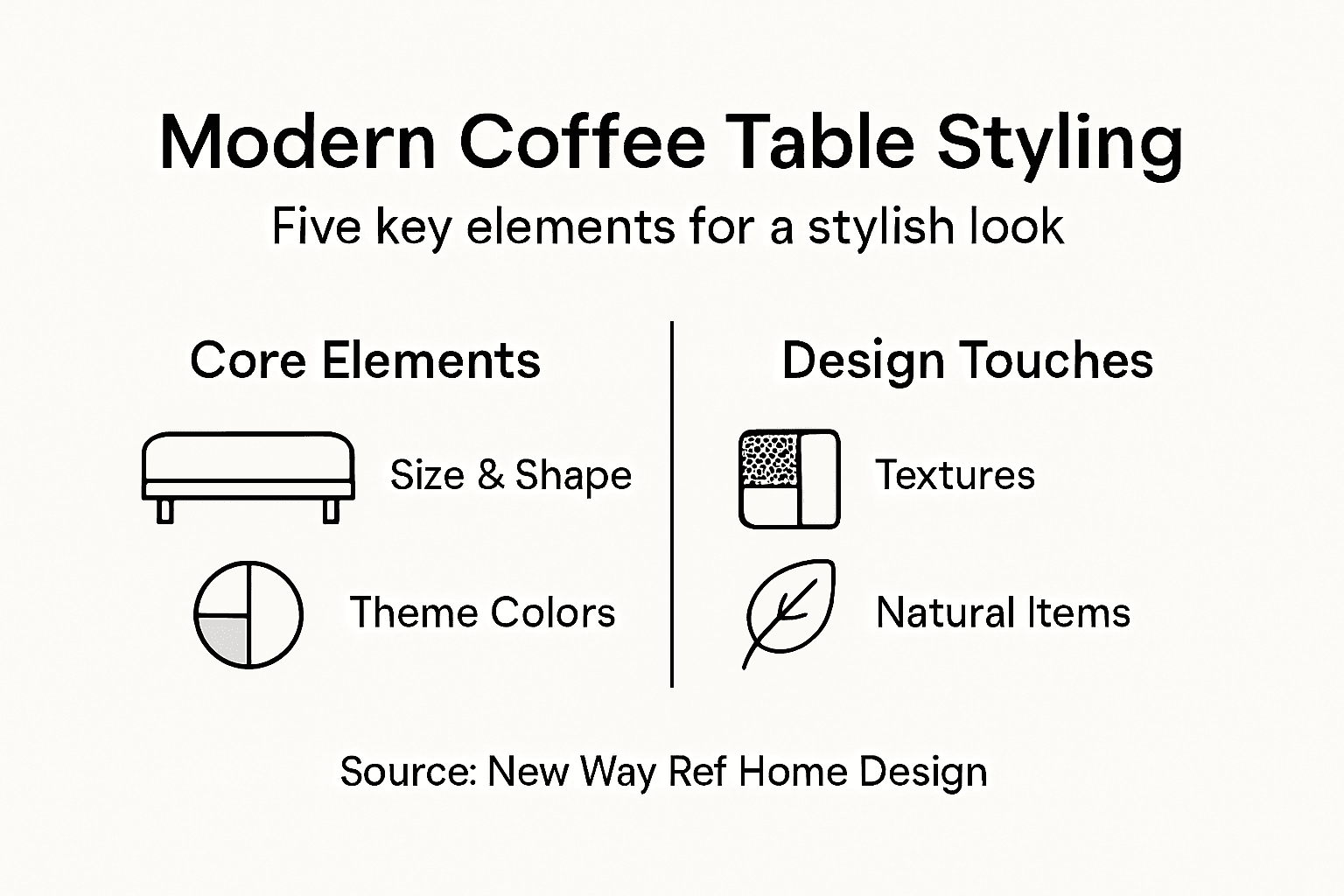
Choosing the perfect coffee table can feel like a puzzle when your living room needs to look sharp and stay functional for gatherings or solo nights in. For young urban homeowners, creating an inviting social space often starts with balancing proportion and style, making the coffee table the subtle anchor of the room. In this guide, you’ll discover how to select the right coffee table size and shape while building a modern look that feels both intentional and livable.
Table of Contents
- Step 1: Assess Coffee Table Size And Shape
- Step 2: Select A Theme And Color Palette
- Step 3: Arrange Decorative Essentials Strategically
- Step 4: Layer Textures And Add Natural Elements
- Step 5: Evaluate Balance And Visual Appeal
Quick Summary
| Key Insight | Explanation |
|---|---|
| 1. Measure Your Space Carefully | Take accurate room measurements to ensure the coffee table complements your seating area without overcrowding it. |
| 2. Choose an Appropriate Shape | Select a coffee table shape that best fits the size and arrangement of your seating, enhancing flow and visual appeal. |
| 3. Establish a Cohesive Color Palette | Use a neutral base with accent colors that harmonize with your existing décor for a stylish, unified design. |
| 4. Layer Textures for Depth | Combine different materials and integrate natural elements to create a dynamic and inviting coffee table display. |
| 5. Assess Balance and Visual Appeal | Aim for a well-balanced arrangement by varying heights and ensuring visual weight is distributed evenly across the table. |
Step 1: Assess Coffee Table Size and Shape
Selecting the right coffee table involves strategic measurements and understanding your living room’s unique dimensions. The goal is finding a table that harmonizes with your space while providing functional elegance.
Start by measuring the length and width of your seating area. Accurate room measurements help determine the ideal coffee table proportions. For rectangular rooms, aim for a table that is approximately two-thirds the length of your sofa. In smaller spaces, round tables offer superior maneuverability and visual softness.
Consider these critical sizing guidelines:
- Distance from Sofa: Maintain 12-18 inches between the coffee table and seating
- Height Ratio: Select a table within 1-2 inches of your sofa seat height
-
Shape Considerations:
- Rectangular tables work best with long sectional sofas
- Round tables complement smaller seating arrangements
- Oval tables provide a nice compromise between rectangular and round designs
Your coffee table should feel proportional and intentional - not cramped or overwhelmingly large. Think of it as the functional centerpiece that connects your seating area.
Here’s a quick comparison of common coffee table shapes and their best uses:
| Shape | Best For | Visual Effect |
|---|---|---|
| Rectangular | Large sectionals or long sofas | Streamlined and classic |
| Round | Small rooms or tight corners | Softens the space |
| Oval | Transitional spaces | Smooth and versatile |
| Square | Compact seating groups | Balanced and grounded |
Pro tip: Use painter’s tape to outline potential table dimensions on your floor before purchasing to visualize the actual space requirement.
Step 2: Select a Theme and Color Palette
Creating a cohesive color palette for your coffee table requires understanding how colors interact and influence your living room’s overall aesthetic. The goal is crafting a visual narrative that reflects your personal style while maintaining modern design principles.
Color palettes for modern spaces should balance harmony and visual interest. Consider these strategic approaches to selecting your theme:
- Neutral Base: Start with a neutral foundation like whites, grays, or beiges
- Accent Colors: Introduce 1-2 bold colors that complement your existing furniture
-
Tone Selection:
- Warm tones create intimate, energetic spaces
- Cool tones provide calm and sophisticated atmospheres
- Metallic accents add modern sophistication
A well-chosen color palette transforms your coffee table from a simple furniture piece into a deliberate design statement.
Remember that your coffee table can either blend seamlessly with the room or stand out as a striking focal point. The key is intentional selection that feels natural and authentic to your space.
Pro tip: Use color wheel principles and collect paint swatches to test potential color combinations before making a final decision.
Step 3: Arrange Decorative Essentials Strategically
Transforming your coffee table from a simple surface to a curated display requires thoughtful arrangement and strategic placement of decorative elements. The art of styling involves creating visual interest while maintaining functionality and personal expression.
Decorative item placement should follow key design principles that balance aesthetics and practicality. Consider these strategic approaches:
-
Layering Techniques:
- Use books as foundational elements
- Add sculptural objects for visual height
- Incorporate trays to organize smaller items
-
Composition Rules:
- Create clusters with odd-numbered items
- Mix textures and materials
- Vary object heights for dynamic visual appeal
A well-styled coffee table tells a story about your personality while remaining functional and inviting.
Remember that negative space is just as important as the objects you choose. Leaving some areas clear ensures your coffee table remains usable and doesn’t feel overwhelmed by decorative elements.
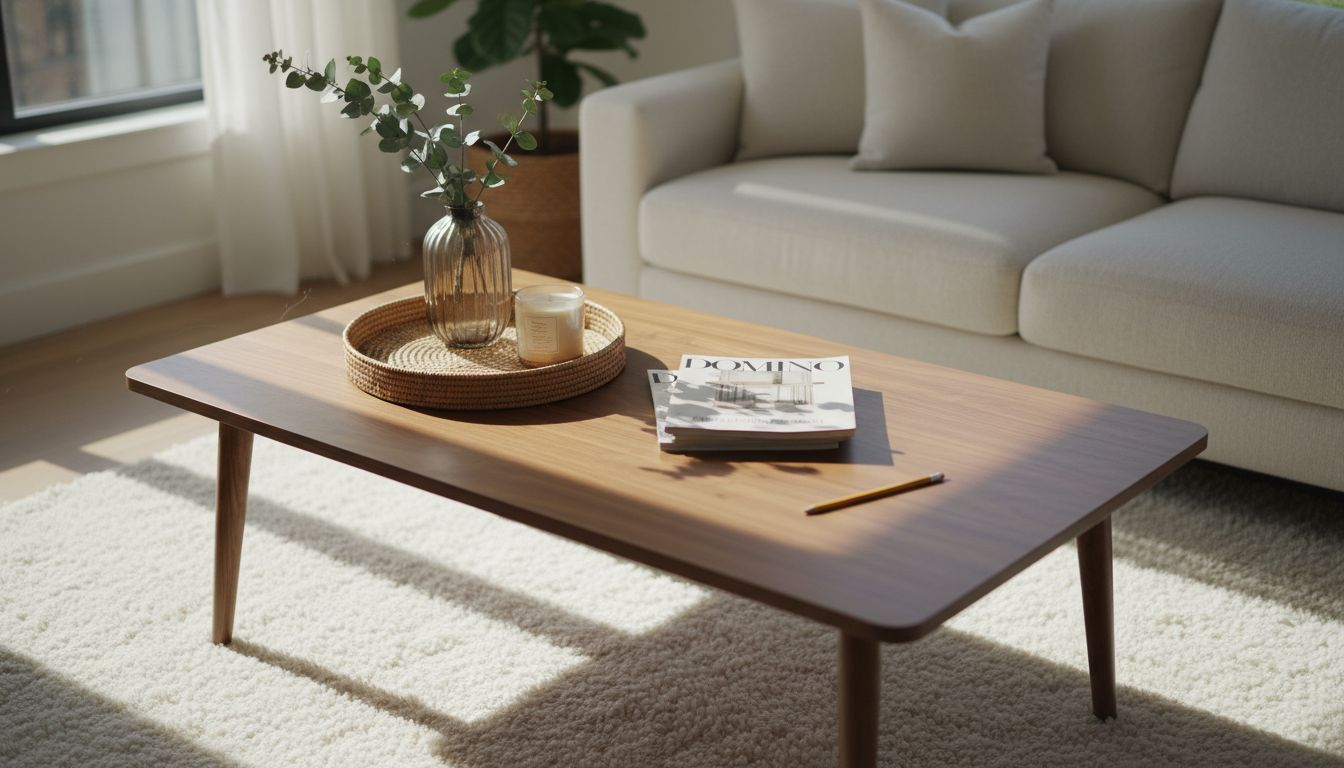
Pro tip: Rotate your decorative items seasonally to keep the display fresh and reflective of your current style and mood.
Step 4: Layer Textures and Add Natural Elements
Creating visual depth on your coffee table involves thoughtfully combining different materials and incorporating organic elements that breathe life into your living space. Texture is the secret ingredient that transforms a flat surface into a dynamic, inviting display.
Texture layering techniques can dramatically enhance your coffee table’s aesthetic appeal. Consider these strategic approaches to mixing materials:
-
Texture Combinations:
- Pair smooth glass surfaces with rough stone elements
- Mix metallic accents with soft textile surfaces
- Combine wood grains with sleek ceramic pieces
-
Natural Element Integration:
- Add small potted succulents for living texture
- Include natural stone or wooden objects
- Incorporate seasonal botanical arrangements
Thoughtful texture mixing creates a sensory experience that makes your coffee table feel alive and intentionally designed.
Remember that balance is key. Not every surface needs to be dramatically different - subtle variations can create sophisticated visual interest without overwhelming the space.
Use this summary as a guide when styling your coffee table:
| Styling Principle | Purpose | Visual Benefit |
|---|---|---|
| Layering | Creates depth and interest | More dynamic arrangement |
| Texture Mixing | Adds tactile experience | Inviting, lively surface |
| Negative Space | Prevents overcrowding | Keeps table functional |
Pro tip: Select natural elements that require minimal maintenance, like air plants or preserved botanical arrangements, to keep your coffee table looking fresh with minimal effort.
Step 5: Evaluate Balance and Visual Appeal
Transforming your coffee table from a mere furniture piece to a curated design statement requires a discerning eye for balance and aesthetic harmony. The goal is creating a visually compelling arrangement that feels intentional and effortlessly sophisticated.
Coffee table styling techniques demand thoughtful consideration of proportion and visual weight. Consider these strategic evaluation methods:
-
Symmetry Principles:
- Group items in odd numbers
- Create visual triangles with height variations
- Maintain approximately 30% negative space
-
Balance Checklist:
- Ensure no single side feels heavier
- Mix horizontal and vertical elements
- Use trays to contain smaller accessories
A perfectly balanced coffee table tells a story without saying a word, drawing the eye naturally across its thoughtfully arranged surface.
Remember that balance is not about rigid perfection, but about creating a harmonious composition that feels organic and personal. Step back periodically and view your arrangement from different angles to assess its overall visual impact.
Pro tip: Take a quick smartphone photo of your coffee table arrangement to help you objectively evaluate its balance and visual composition.
Elevate Your Modern Living Room with the Perfect Coffee Table
Styling your coffee table for a modern living room can feel overwhelming when trying to balance size, shape, texture, and color. You want a piece that not only fits your space but also reflects your style and pulls the whole room together. The challenge is finding furniture and decor that offer both visual appeal and practical function while embodying the design principles discussed — such as layering textures, maintaining balance, and selecting a cohesive color palette.
Explore our curated Home & Kitchen collection at New Way Ref where you can find stylish coffee tables that tick every box.
Start transforming your living room today with pieces designed to complement your modern aesthetic. Visit New Way Ref to browse furniture and accessories that make your coffee table the centerpiece it deserves to be. Don’t wait to create a space you love. Shop now for modern furniture solutions that bring your vision to life with free shipping on orders over $50.
Frequently Asked Questions
How do I determine the right size for my coffee table?
To determine the right size for your coffee table, measure your seating area and aim for a table that is about two-thirds the length of your sofa. Ensure there is a distance of 12-18 inches between the table and your seating for optimal comfort.
What color palette works best for a modern coffee table?
A modern coffee table can benefit from a neutral base color, such as whites, grays, or beiges, complemented by one or two bold accent colors. Start by selecting a neutral tone and test out accent colors that enhance your existing furniture within 24 hours for a cohesive look.
What decorative items should I use on my coffee table?
Use a combination of books, sculptural objects, and trays to create an interesting arrangement on your coffee table. Aim to group items in odd numbers and mix different textures to enhance visual appeal while keeping the arrangement functional.
How can I add natural elements to my coffee table decor?
Incorporate natural elements by adding small potted plants, such as succulents, or using decorative objects made of wood or stone. Choose at least one natural item to place on your coffee table to introduce life and texture to your arrangement.
How do I evaluate balance on my coffee table display?
Evaluate balance by ensuring that no side of your coffee table feels heavier than the other and mixing horizontal and vertical elements. Step back and assess your arrangement from different angles, making adjustments to create a harmonious composition.
What is an effective way to style my coffee table seasonally?
To style your coffee table seasonally, regularly rotate your decorative items and incorporate seasonal botanical arrangements. Change your decor every three months to keep the display fresh and reflective of the current season.